blog spot
THE
health hub
A collection of helpful articles & information to spread awareness through education from our staff to you

Recent public health reports confirm that measles cases are increasing again in parts of the United States. While outbreaks may not be widespread in every region, the virus’s ability to spread rapidly makes vaccination status an important topic for families in Manassas.
The most effective protection remains full immunization with the MMR vaccine.
Understanding the Risk
Measles spreads through the air and can infect individuals who were never in direct contact with a sick person. Because symptoms initially resemble a routine viral illness, measles can circulate for days before being identified.
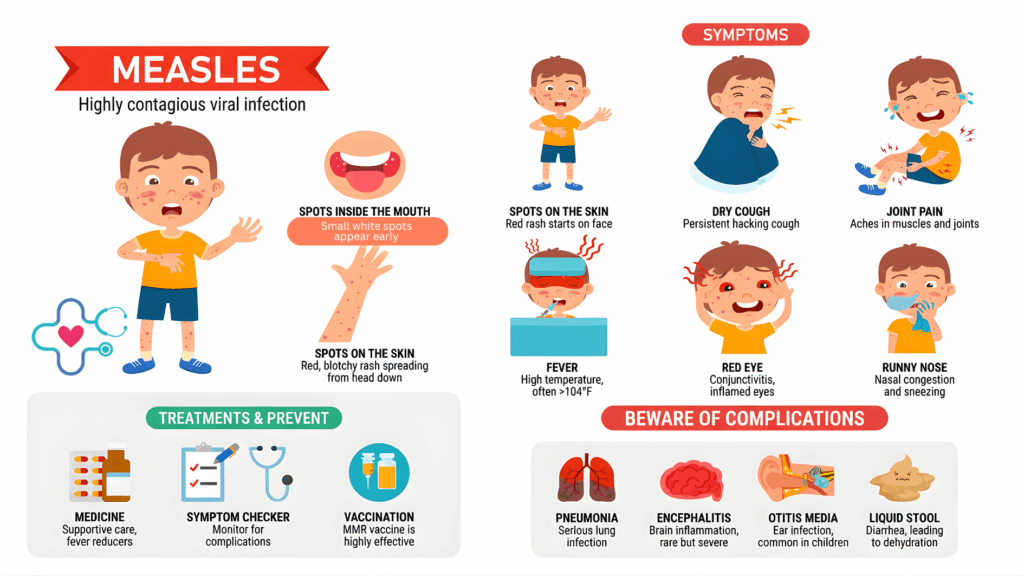
Early symptoms often include high fever, cough, runny nose, and red eyes. The rash appears later. By that point, a child may already have exposed others.
Although many children recover, complications can include pneumonia, dehydration, ear infections, and in rare cases, brain inflammation. Hospitalization is not uncommon in outbreak settings.
These risks are significantly reduced in vaccinated children.
It is common for parents to have questions about vaccine safety. The MMR vaccine has been extensively studied worldwide and continues to be monitored for safety. Side effects are generally mild and temporary, such as soreness at the injection site or a low-grade fever.
If you have concerns, discussing them with a pediatric provider allows for informed decision-making based on evidence rather than misinformation.
If your child is due for an MMR vaccine in Manassas, now is the time to confirm protection.
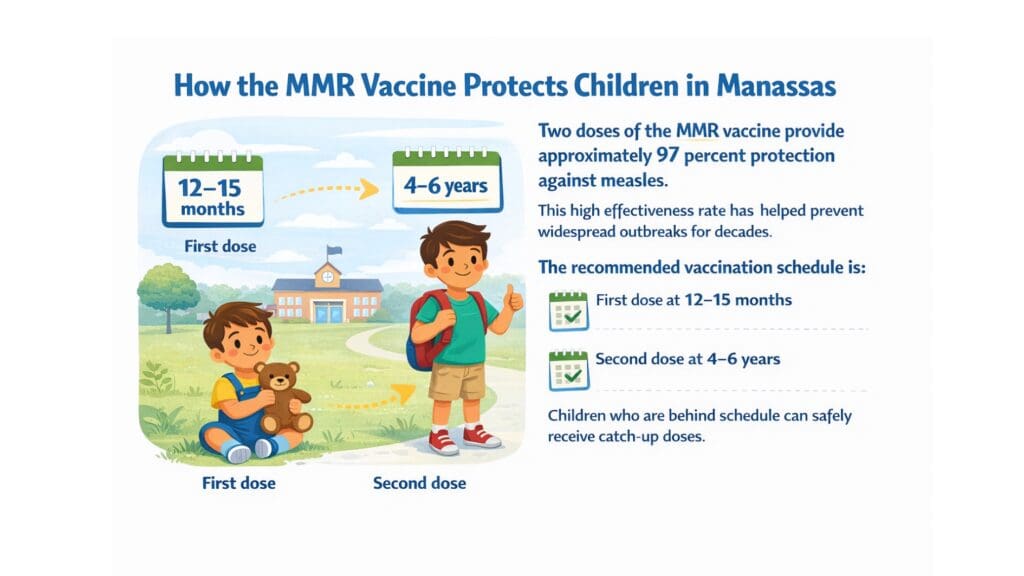
How Effective Is the MMR Vaccine?
The MMR vaccine protects against measles, mumps, and rubella. For measles specifically:
• One dose is approximately 93 percent effective
• Two doses are approximately 97 percent effective
That level of protection is considered extremely strong in preventive medicine. For most children who receive both recommended doses, immunity is long-lasting.
The standard schedule recommended by the CDC is:
• First dose between 12 and 15 months
• Second dose between 4 and 6 years
If your child has received both doses, they are highly protected. If you are unsure, this is the time to review records.
Is the Measles (MMR) Vaccine Safe for Children?
Safety is often the first concern for families in Manassas considering immunizations. The MMR vaccine is one of the most extensively studied vaccines in pediatric medicine.
Before approval, vaccines must pass through:
• Pre-clinical laboratory testing
• Phase 1, 2, and 3 clinical trials
• FDA review
• Ongoing post-licensure monitoring
Even after decades of use, safety monitoring continues through national reporting systems.
The vast majority of children tolerate the MMR vaccine without issue. When side effects occur, they are generally mild and short-lived, including:
• Temporary soreness at the injection site
• Low-grade fever
• Mild rash
Severe allergic reactions are extremely rare.
Extensive research has shown no association between the MMR vaccine and autism. Multiple international studies have confirmed its safety profile.
From a medical standpoint, the risk of measles infection — including complications like pneumonia or encephalitis — far outweighs the risk of vaccine side effects.
For families searching for the measles vaccine in Manassas VA, understanding the safety data can provide reassurance and confidence in your decision.
👉 Call today to schedule your child’s measles vaccine in Manassas.
Prevention remains far simpler than treatment.
CATEGORY
2/16/2026
POSTED
Measles is appearing in more communities across the U.S., and many parents are understandably concerned. While measles may feel like an illness from the past, it remains one of the most contagious viral infections affecting children today — and it often begins in a way that’s easy to miss.
How does measles start? How worried should I be? And when should I bring my child in?
This guide is designed to give parents clear, practical information so you can recognize symptoms early, understand how measles spreads, and feel confident about next steps if your child becomes ill.
What Is Measles and Why Is It So Contagious?
Measles is a viral illness that spreads through the air when an infected person coughs, sneezes, or breathes. Unlike many other childhood viruses, measles does not require close contact to spread.
The virus can remain in the air for up to two hours after an infected person leaves a room, meaning exposure can occur in classrooms, daycare centers, grocery stores, or medical offices without direct interaction.
What makes measles especially challenging is that children are contagious before parents realize it’s measles. By the time the classic rash appears, the virus may have already spread to others.
This is why early recognition and prevention play such an important role in protecting families and communities.
Early Measles Symptoms Parents Often Miss
Many parents associate measles with a rash — but the rash comes later.
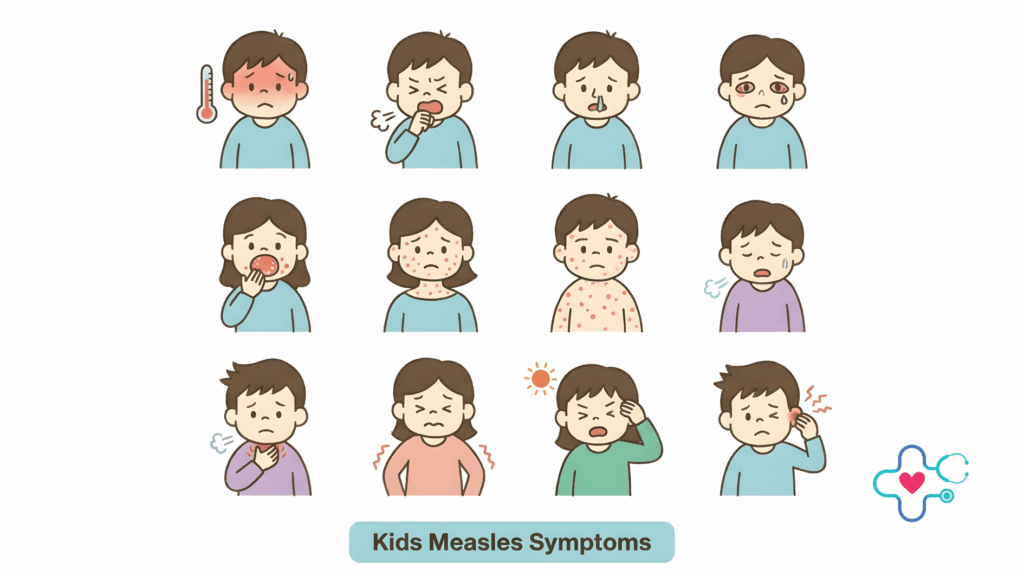
In the early stage, measles often looks like a severe cold or flu. Symptoms may include:
- High fever, often rising quickly
- Cough
- Runny nose
- Red, watery, or irritated eyes
- Fatigue, irritability, or decreased appetite
Because these symptoms are common with many viral illnesses, measles can be difficult to identify at first. A key difference parents often notice is how sick their child looks and feels, especially when fever is high and persistent.
When the Rash Appears
The measles rash typically develops three to five days after fever begins. It usually:
- Starts on the face or hairline
- Spreads downward to the neck, trunk, arms, and legs
- Appears as flat red spots that may merge together
If your child develops fever followed by a spreading rash, or symptoms seem to worsen instead of improve, it’s important to contact a medical provider.
Why Measles Can Be Serious for Children
While many children recover from measles, it is not always a mild illness. Some children are at higher risk for complications, including:
- Infants under 12 months
- Children who are not fully vaccinated
- Children with asthma or chronic medical conditions
- Pregnant individuals and immunocompromised family members
Complications can include ear infections, dehydration, pneumonia, and in rare cases, serious neurologic issues. This is why prompt guidance and careful monitoring are important, even if symptoms seem manageable at first.
How Parents Can Protect Their Children From Measles
MMR Vaccination
The MMR (measles, mumps, rubella) vaccine is the most effective way to prevent measles. Two doses provide strong, long-lasting protection and significantly reduce the risk of severe illness and complications.
If you’re unsure whether your child is up to date on vaccinations or have questions about timing, a pediatric provider can help review your child’s immunization history and answer concerns.
Reducing Exposure
During times of increased measles activity:
- Avoid close contact with anyone who has fever and rash symptoms
- Be cautious in crowded indoor settings when possible
- Notify your healthcare provider if your child may have been exposed
Protecting High-Risk Family Members
If your household includes infants, pregnant individuals, or people with weakened immune systems, extra care is important. Keeping eligible family members vaccinated and limiting exposure to illness helps protect those most vulnerable.
When to Call Before Coming In
Because measles spreads so easily, calling ahead before visiting urgent care is essential.
Please contact a medical provider first if your child has:
- Fever along with a rash
- Known exposure to someone with measles
- Symptoms and is not fully vaccinated
Calling ahead allows our team to prepare appropriately and helps protect other children and families in our care.
Seek urgent or emergency care immediately if your child experiences:
- Trouble breathing or fast, labored breathing
- Extreme sleepiness, confusion, or difficulty staying awake
- Signs of dehydration such as very dry mouth, no tears, or minimal urination
- A very high fever that does not respond to medication
You never have to make these decisions alone. We are always here to help guide you.
For families seeking measles evaluation in Manassas, Night Watch Urgent Care provides walk-in pediatric care without long emergency room wait times.
Our pediatric-trained providers focus on early recognition, safe evaluation, and helping parents understand what to expect next.
CATEGORY
2/12/2026