

blog spot
THE
health hub
A collection of helpful articles & information to spread awareness through education from our staff to you

How to Prevent Dehydration and Know When to Seek Care
A stomach bug, also called gastroenteritis, is a common illness that causes vomiting, diarrhea, stomach cramps, and sometimes fever. It’s usually caused by a virus and typically lasts a few days.
Most children recover at home with rest and fluids. The biggest concern isn’t the virus itself — it’s dehydration from fluid loss.
Top Things to Know
- Stomach bugs cause vomiting and diarrhea, which can lead to fluid loss.
- Dehydration is the main risk in children.
- Most kids improve within a few days with proper hydration.
- Small, frequent fluids work better than large amounts at once.
- Severe dehydration requires medical care.
Signs & Symptoms
What Are the Signs of a Stomach Bug?
The most common symptoms include:
- Vomiting
- Diarrhea
- Nausea
- Belly cramps
- Fever
- Headache
- Fatigue
- Muscle aches
When kids vomit or have diarrhea, they lose fluids quickly. If those fluids aren’t replaced, dehydration can develop.

Why Hydration Matters
Dehydration happens when the body doesn’t have enough fluids to function properly. Young children are especially vulnerable because their bodies are smaller and lose fluids faster.
Early hydration helps:
- Prevent ER visits
- Shorten recovery time
- Reduce weakness and dizziness
- Lower complication risk
The goal is to replace fluids steadily — not all at once.
Treatment & Home Care
How Can I Keep My Child Hydrated?
If your child has mild symptoms, you can usually manage care at home.
Offer Small Amounts Frequently
Give small sips every 5–10 minutes. Large drinks can trigger more vomiting.
Use Oral Rehydration Solutions
Electrolyte drinks made for children replace fluids and salts lost through vomiting and diarrhea. Water alone may not be enough.
Try Frozen Options
Electrolyte popsicles or ice chips can be easier for some kids to tolerate.
Resume Food Slowly
Once vomiting improves, start with bland foods like toast, rice, applesauce, or crackers. Avoid fatty or greasy foods.
Avoid Sugary Drinks
Juice, soda, and sports drinks can worsen diarrhea.
Signs of Dehydration
Call your provider or seek evaluation if your child has:
- Very dry mouth or cracked lips
- No tears when crying
- Fewer wet diapers or bathroom trips
- Dark yellow urine
- Unusual sleepiness or low energy
- Dizziness or weakness
For babies, fewer than three wet diapers in 24 hours is concerning.
When Should I Seek Care Right Away?
Seek urgent medical attention if your child:
- Cannot keep fluids down
- Has blood in vomit or stool
- Has severe abdominal pain
- Shows signs of significant dehydration
- Has a high fever that doesn’t improve
- Is difficult to wake or unusually confused
If you’re unsure whether it’s serious, it’s always safer to have your child evaluated.
Parents in Manassas often look for urgent care for child dehydration or stomach flu symptoms when vomiting won’t stop or their child seems unusually tired. At Night Watch Urgent Care in Manassas, we evaluate hydration status, monitor vital signs, and provide treatment — including IV fluids when necessary.
If you’re unsure whether it’s serious, it’s always appropriate to have your child checked.
📍 11700 Sudley Manor Drive
📞 (703) 589-9695
CATEGORY
3/01/2026
POSTED
When your child is sick or hurt, the best place to go depends on two things: how severe the symptoms are and how fast your child needs to be evaluated. If you’re seeing emergency warning signs (trouble breathing, severe allergic reaction, seizure, or a child who is hard to wake), skip the debate and go straight to the ER or call your local emergency number.
Below is a practical, parent-friendly guide to help you decide.
Choose the ER if your child may be in danger right now or could worsen quickly.
Choose Urgent Care if your child needs same-day evaluation for a non-life-threatening problem (especially when your pediatrician is closed or can’t see you soon).
Choose the Pediatrician for routine care, ongoing concerns, and problems that can safely wait for an office visit.
If you’re unsure, many urgent care clinics also offer telemedicine or nurse/triage guidance—but if your gut says “this is an emergency,” trust that and go to the ER.
Go to the ER now (or call emergency services) if…
These are red-flag symptoms that should be treated as emergencies:
- Trouble breathing, fast breathing, ribs pulling in with breaths, blue/gray lips or face.
- Severe allergic reaction: facial/lip/tongue swelling, trouble breathing, widespread hives with vomiting or dizziness.
- Seizure, fainting, or your child is very hard to wake/confused.
- Head injury with loss of consciousness, repeated vomiting, worsening headache, or unusual behavior.
- Severe bleeding that won’t stop with firm pressure.
- Suspected broken bone with deformity (bone looks out of place), severe pain, or numbness/tingling.
- Severe dehydration: no urine for 8–12 hours, very dry mouth, no tears, lethargy, or sunken eyes (especially in babies).
- Fever in a baby under 3 months (or any infant who looks very ill).
- Poisoning/ingestion (medications, chemicals, unknown substances), or concern for overdose.
- Severe abdominal pain, especially with a hard belly, persistent vomiting, or pain in the lower right abdomen.
- Any situation where you feel your child is not safe to wait.
Urgent Care is usually best for…
Urgent care is a strong option when your child needs prompt care but is stable.
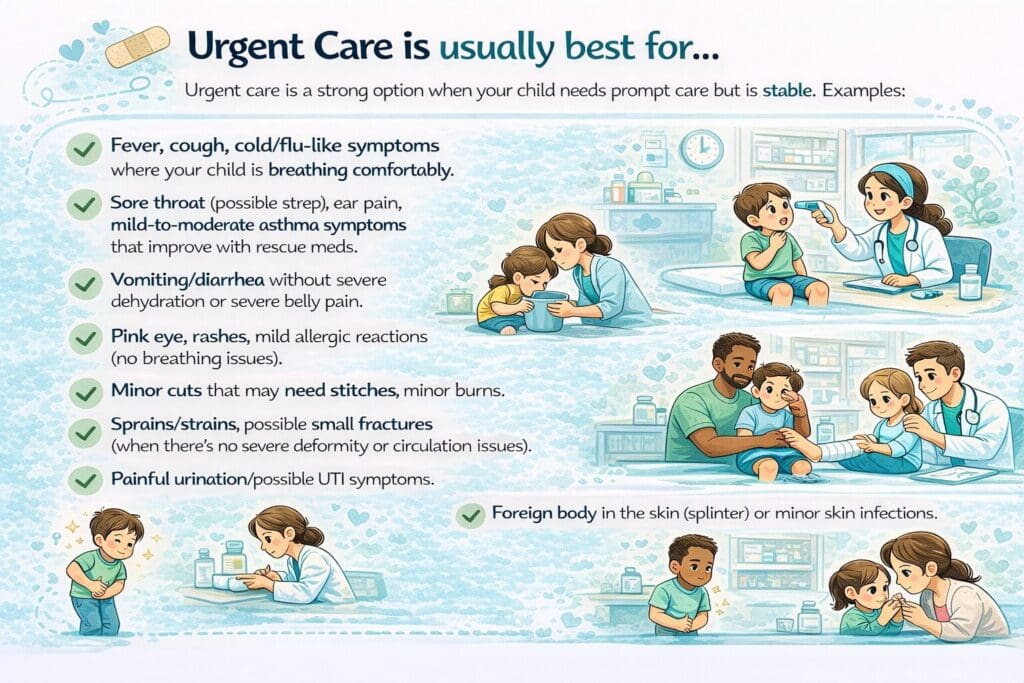
Why parents choose urgent care: Urgent care is a go-to option when you need your child seen the same day but your pediatrician is fully booked. Many urgent care clinics can also provide on-site testing, like rapid strep, flu, or COVID tests, and may offer X-rays, which can speed up answers and treatment decisions. It’s also especially helpful during evenings and weekends when your pediatrician’s office is closed, so you’re not forced to wait until the next business day.
Your Pediatrician is best for… Your child’s pediatrician should be your home base for routine and long-term care, including well visits, vaccines, and growth and developmental check-ins. They’re also the best fit for ongoing or recurring concerns, like asthma management plans, eczema, constipation, and repeated ear infections, because they can follow patterns over time and adjust care as your child grows. Pediatricians are ideal for behavior and sleep concerns, school-related issues, anxiety, and ADHD evaluations, and they’re a great choice when symptoms are mild, improving, and safe to wait for an appointment. They should also handle follow-ups after urgent care or ER visits to make sure your child is recovering well and to coordinate next steps if anything needs closer monitoring. Why it matters: your pediatrician knows your child’s history, tracks progress across multiple visits, and can coordinate referrals to specialists when needed.
Common scenarios (where to go)
1) Ear pain + low fever
- Usually urgent care or pediatrician (same/next day).
- ER only if severe swelling behind the ear, stiff neck, extreme lethargy, or severe dehydration.
2) Sore throat + fever
- Urgent care or pediatrician for strep testing and guidance.
- ER if trouble breathing, drooling with inability to swallow, or signs of dehydration.
3) Asthma/wheezing
- Urgent care if mild–moderate and improving with rescue inhaler.
- ER if your child is struggling to breathe, can’t speak in full sentences (age-appropriate), lips look bluish, or rescue meds aren’t helping.
4) Cut on the face
- Urgent care is often ideal, especially if it needs stitches and it’s within a few hours of the injury.
- ER if bleeding won’t stop, the wound is deep with visible fat/muscle, or there’s concern for a head injury.
5) Head bump after a fall
- Urgent care if your child is acting normal and symptoms are mild.
- ER for loss of consciousness, repeated vomiting, worsening headache, confusion, seizure, or very abnormal sleepiness.
If you’re stuck between urgent care and the ER, choose the safer option—especially for breathing problems, dehydration, head injuries, or very young infants. And if you’re deciding between urgent care and the pediatrician, urgent care makes sense when you can’t get a timely appointment or symptoms are worsening.
Feeling sick or dealing with a minor injury? Visit Night Watch Urgent Care in Stone Ridge at 42010 Village Center Plaza, Suite 100, Aldie, VA 20105, or call (703) 775-4999 to get guidance before you come in.
CATEGORY
2/22/2026
POSTED
Kids today face pressures we never imagined—social media comparisons, academic stress, and a world that sometimes feels uncertain. At Night Watch Pediatric Urgent Care in Manassas, we’re here to help your child navigate their emotions with our Emotional Wellness Visits—because mental health care shouldn’t wait.
More Than a Check-Up
Our Emotional Wellness Visits go beyond physical health to address what’s happening inside your child’s heart and mind. Using the Enrichly Self-Esteem Assessment, we screen for confidence issues, anxiety, and depression in children ages 6–17—catching concerns early, when they’re easiest to address.
The Visit, Step by Step
- Check In: Your child completes the Enrichly assessment on a tablet or paper
- Connect: Our provider has a warm, age-appropriate conversation about school, friends, and feelings
- Create: We build a personalized Confidence Builder Plan with goals like journaling or positive affirmations
- Follow Up: A 4-week visit to reassess, celebrate wins, and adjust as needed
When to Bring Your Child In
- They seem sad, anxious, or “not themselves”
- You’ve noticed low confidence or negative self-talk
- School or friendships have become a struggle
- They’re pulling away from activities they used to love
- You just have a feeling something’s off
Our Manassas Mental Health Partners
If your child needs ongoing therapy or specialized care, we’ll connect you with trusted local providers.
You don’t need a diagnosis or a crisis to walk through our doors. If your child is struggling—even a little—we’re here to help. Early support builds resilience, confidence, and coping skills that last a lifetime.
Every child deserves to feel seen, heard, and confident.
Walk in for an Emotional Wellness Visit at Night Watch – Manassas
CATEGORY
11/26/2025